
Vision Systems Are Having Their Moment
Something interesting happened in robotics news this week, and it wasn't another humanoid demo or warehouse automation announcement. Instead, we saw a cluster of developments that collectively point to vision systems finally maturing from research curiosity to production workhorse.
Consider the range: Cognex released the In-Sight 3900, a vision system that processes images four times faster than its predecessors while running AI models at full production speed. Carnegie Mellon researchers deployed World2Rules, an AI system that analyzes visual patterns of aircraft movement to predict collisions at airports. Queen's University's Melissa Greeff discussed vision-based navigation for aerial robots that can learn and adapt in real time. These aren't related projects—they're parallel evolutions of the same core capability.
For years, machine vision in robotics has been the domain of carefully controlled environments: consistent lighting, known object positions, predictable scenarios. The promise was always that robots would eventually see and understand the messy, chaotic real world. This week's news suggests that transition is accelerating.
What's changed? Processing power is part of the story. Cognex's 25-megapixel resolution running at production speeds would have been impossible even a few years ago. But the bigger shift is architectural: these systems are combining traditional rule-based vision with AI models that can handle ambiguity and variation. The In-Sight 3900 specifically integrates "deterministic, real-time inspections" with edge AI—bridging the reliability requirements of industrial automation with the flexibility of neural networks.
The airport safety application is particularly telling. World2Rules doesn't just identify unsafe aircraft positions—it learns interpretable rules from operational data, creating a system that can explain its predictions. This interpretability matters because vision systems are moving from inspection tasks to decision-making roles. When a robot or AI system can see, process, and act on visual information in milliseconds, the stakes get higher.
Aerial robotics research provides another angle. Vision-based navigation for drones and flying robots has always been harder than ground-based vision—there's no room for error, less processing time, and more complex 3D environments. The fact that researchers are now tackling safe learning-based control for aerial platforms suggests the underlying vision technology has matured enough to handle these edge cases.
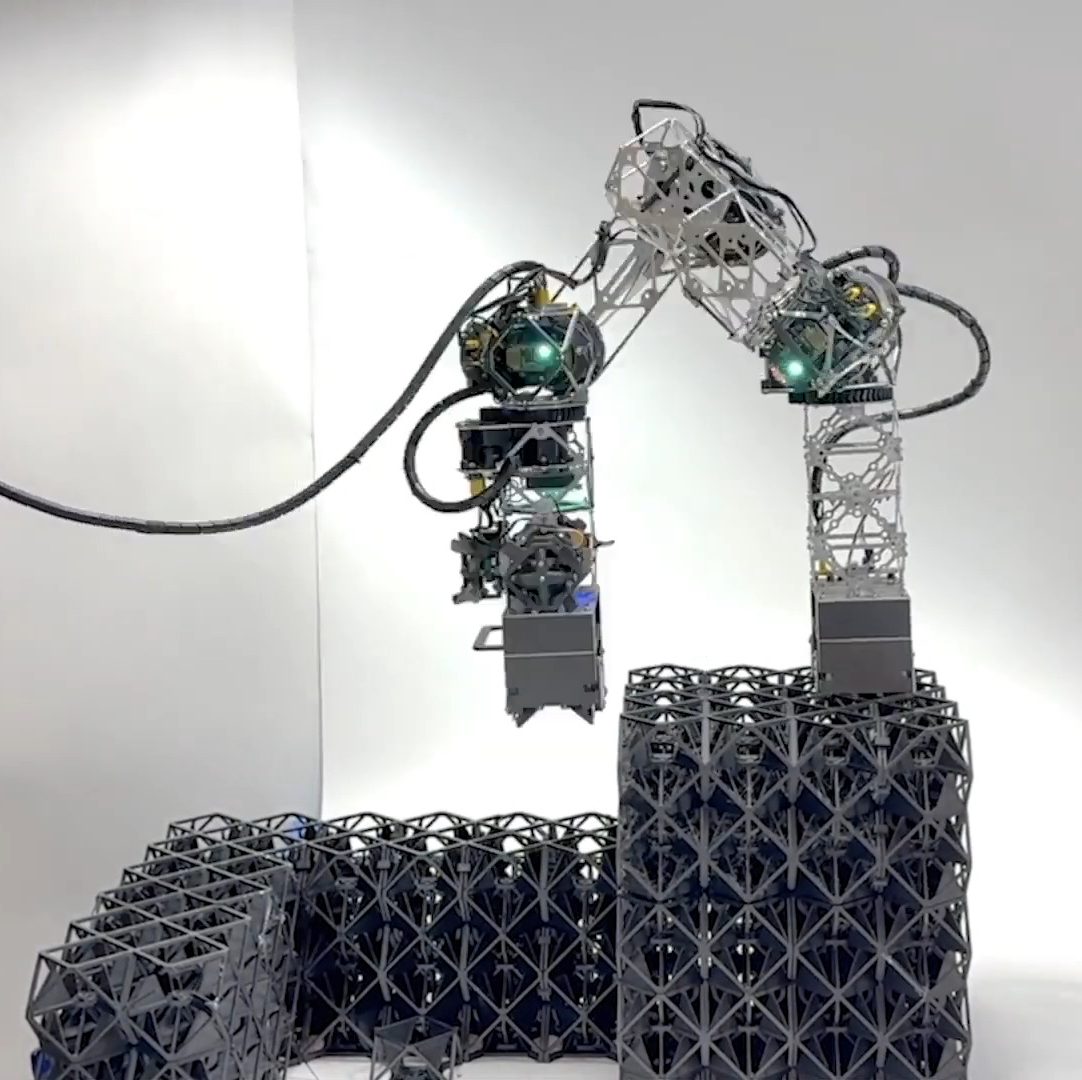
We're also seeing vision systems enable capabilities that were pure science fiction recently. The MILAbot construction robot navigates by anchoring to structures it's building—a task requiring real-time visual processing of partial, evolving environments. Genesis AI's sensor-loaded data collection glove captures hand movements visually to train robotic manipulation—turning vision into a training tool, not just a sensor.
The convergence is what matters. When factory automation, airport safety, aerial navigation, and construction robotics all advance their vision capabilities in the same week, it's not coincidence. It's infrastructure. Vision systems are becoming the universal sensor layer that makes autonomous operation possible across domains.
This has implications beyond individual applications. As vision processing becomes faster, cheaper, and more reliable, it removes a fundamental bottleneck in robotics deployment. Robots that can see and understand their environment don't need perfectly structured workspaces or exhaustive programming. They can adapt, learn, and operate in human environments.
We've spent years talking about the 'brain' of robots—the AI models and reasoning systems. This week reminded us that eyes matter just as much. And unlike humanoid locomotion or dexterous manipulation, vision systems are ready for prime time right now.