
Robot Hands Are Finally Getting the Attention They Deserve
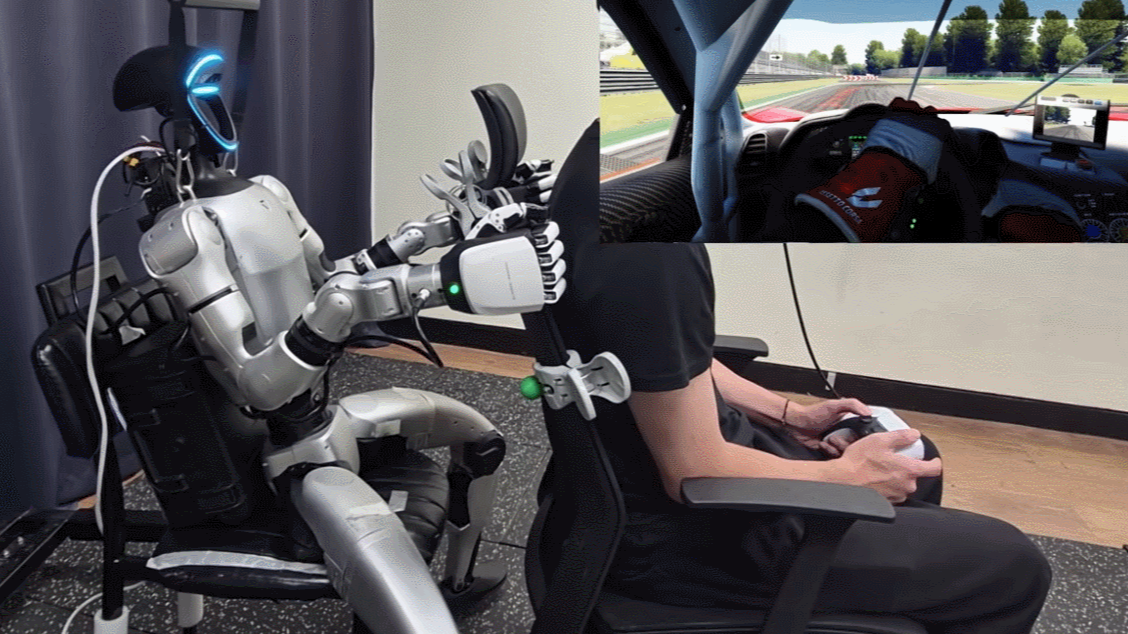
For years, the robotics community has been transfixed by mobility. Can it walk? Can it navigate? Can it climb stairs? Meanwhile, the hands — those remarkably complex endpoints that actually interact with the world — have been treated as an afterthought, bolted onto the end of increasingly sophisticated arms with sensors and controllers that pale in comparison to the compute power dedicated to locomotion.
That's starting to change, and not a moment too soon.
RLWRLD's recent release of RLDX-1 marks a significant shift in how the industry thinks about manipulation. This isn't just another gripper with force sensors. It's a foundation model built specifically for high-degree-of-freedom hands, integrating vision, force sensing, temporal reasoning, and memory to handle genuinely complex tasks like pouring liquids and tracking deformable objects. The company is explicitly positioning dexterity as a standalone problem worthy of dedicated AI architecture, rather than something that can be solved with general-purpose models trained primarily on navigation and positioning.
The timing couldn't be better. Look at the industrial applications emerging across the sector: tire changing systems that need to handle wheels of varying sizes and conditions, warehouse automation that demands gentle handling of irregular packages, and manufacturing tasks requiring precision manipulation of delicate components. These aren't problems you solve with a two-finger gripper and some clever programming. They require genuine understanding of contact dynamics, material properties, and adaptive control.
The academic community is catching on too. Research from EPFL on Kinematic Intelligence shows how movement strategies can transfer across different robot morphologies — work that becomes exponentially more valuable when applied to hands with 15+ degrees of freedom. And Leiden University's flexible microrobots demonstrate that even at microscopic scales, sophisticated manipulation requires rethinking how we approach mechanical design and control.
What's striking is how this mirrors the evolution of computer vision fifteen years ago. Initially treated as a peripheral problem, vision eventually got its own dedicated architectures, training datasets, and research communities. Now dexterity is following the same path, with companies like RLWRLD building specialized models and Config raising $27 million specifically to supply training data for robotic foundation models.
The industrial demand is undeniable. Comau and OMRON's partnership explicitly targets sectors like medical device manufacturing and electronics assembly — applications where manipulation precision matters more than mobility. These aren't companies making speculative bets on future technology. They're responding to present-day customers who need robots that can actually pick things up without dropping them.
The broader lesson here is about resource allocation in robotics development. Yes, we need robots that can navigate complex environments. But if those robots can't manipulate objects with anything approaching human dexterity, their practical utility remains severely limited. A warehouse robot that can drive itself anywhere but can only pick up standardized boxes isn't much help in the messy reality of modern logistics.
Dexterity deserves its own foundation models, its own training datasets, and its own dedicated compute resources. The industry is finally starting to treat it that way. The question now is whether this shift happened soon enough, or whether we've spent the last decade over-investing in legs while under-investing in fingers.