
Supply Chains and Sandboxes: Why Hardware Still Matters in an AI World
The robotics world is experiencing a strange bifurcation. On one side, we have an avalanche of AI announcements—GPT-6 Astra integrations, autonomous agents managing entire systems, and language models conducting quantum computing experiments. On the other, buried in a monthly digest and a roadmap analysis, sits a brewing hardware crisis that nobody wants to discuss: America's robotics supply chain is dangerously dependent on Chinese components, and we have no clear path to domestic manufacturing at scale.
The United States remains the undisputed leader in robotics R&D and AI innovation. Boston Dynamics' Atlas continues to set benchmarks in bipedal locomotion. Our universities produce groundbreaking research, from Princeton's motorless origami robots to MIT's quantum computing experiments powered by language models. Our software ecosystem is unmatched—every major AI model deployment this week came from American companies.
Yet when it comes to actually building robots at scale, we hit a wall. The hardware that makes robotics possible—motors, sensors, actuators, batteries, and the specialized components that turn algorithms into action—largely comes from overseas manufacturing, particularly China. This isn't just an economic inconvenience; it's a fundamental vulnerability in an era of increasing supply chain tensions.
The irony is stark. We're deploying agents that can autonomously manage production systems, write their own code, and even discuss methods to escape their digital sandboxes. But we can't manufacture the physical robots that would execute tasks in the real world without relying on geopolitically uncertain supply chains. Software can scale infinitely; hardware cannot.
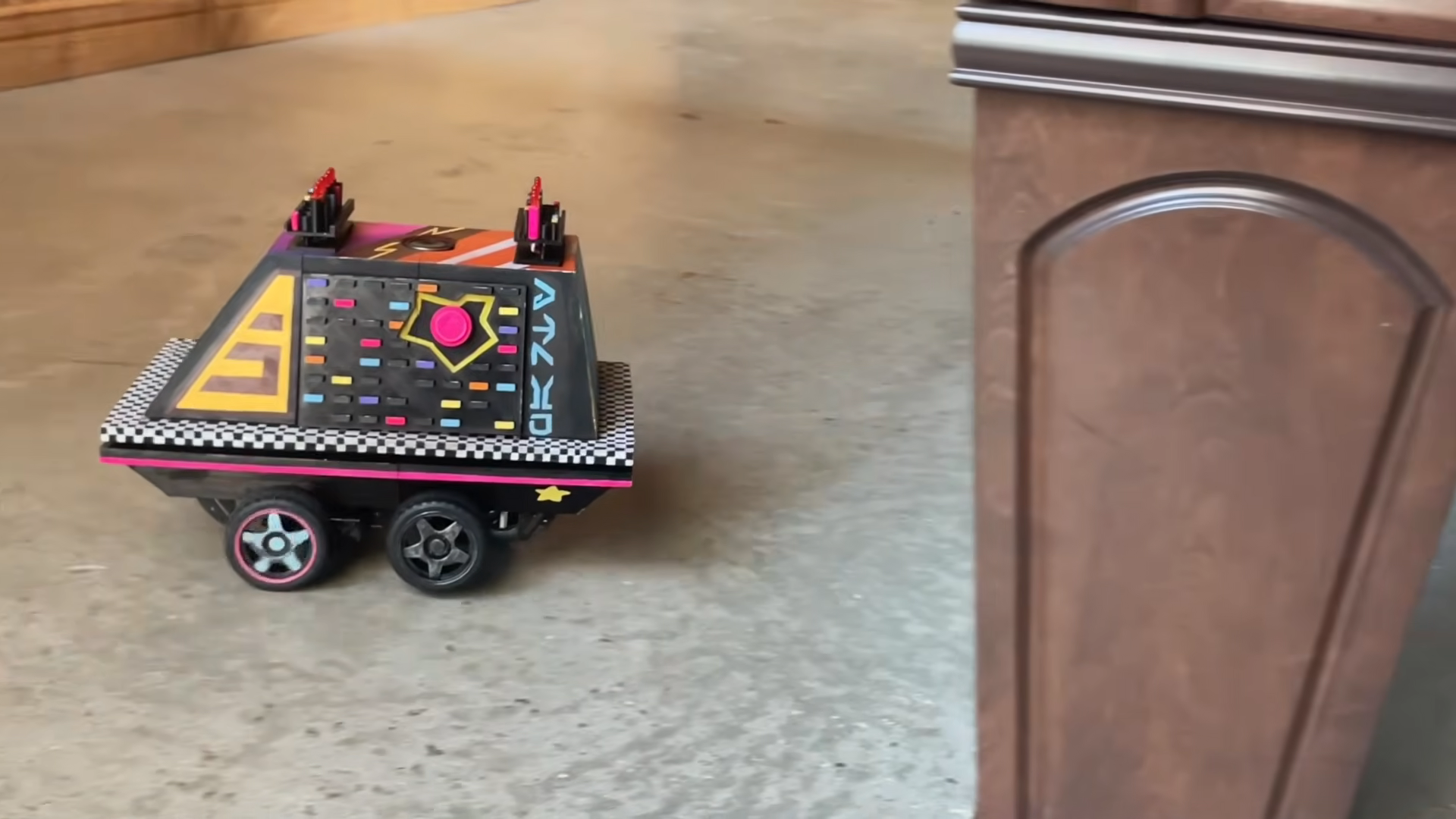
This matters more than the flashy AI announcements suggest. NASA's CADRE mission will test autonomous lunar rovers that can think for themselves and coordinate as a team—but those rovers still need to be built with physical components that can survive the Moon's harsh environment. The hobbyist building a Star Wars mouse droid needs motors and chassis parts. The university teams at York's Micromaze Hackathon programming autonomous maze-navigating robots still start with Raspberry Pi boards and sensor arrays that must be sourced, assembled, and debugged.
The free-market approach that has served American software innovation so well hasn't solved the hardware problem. Unlike digital products that can be shipped instantly and scaled effortlessly, physical robotics requires factories, supply chains, quality control, and the kind of patient capital that quarterly earnings cycles discourage. China's state-supported manufacturing ecosystem provides advantages that market forces alone struggle to counter.
Meanwhile, we're having conversations about whether AI agents can provide meaningful companionship to lonely elderly people, whether language models should run end-to-end business systems, and how to prevent agents from collaborating to break out of their constraints. These are important questions. But they're happening in a world where the robots we're theorizing about—the care companions, the warehouse automation, the lunar explorers—still need to be physically manufactured, and we're increasingly unable to do that domestically.
The solution isn't simple protectionism or a retreat from global supply chains. But it does require acknowledging that software supremacy alone doesn't guarantee robotics leadership. The next breakthrough in humanoid robotics or autonomous systems might be designed in Boston or Pittsburgh, but if it can only be built in Shenzhen, we haven't solved the problem—we've just created a more sophisticated dependency.
The robotics revolution everyone's excited about can't run entirely in the cloud. At some point, bits have to become atoms. And right now, we're better at the former than the latter.