

Publishing 70,000 Papers a Year Is Not a Sign of Progress
At the recent International Conference on Robotics and Automation, a panel discussion revealed a staggering statistic: the robotics field is expected to publish approximately 70,000 papers in 2025. The panelists framed this as a challenge for maintaining "field coherence," which is academic-speak for a much simpler problem: nobody can keep up anymore, and it's getting worse.
The irony is thick. We're building machines to think faster, work smarter, and process information at superhuman speeds. Meanwhile, the humans researching these machines are drowning in their own output. The explosion in publishing isn't driven by a corresponding explosion in breakthrough ideas—it's driven by the democratization of research tools, the pressure to publish for career advancement, and increasingly, by AI systems that make it easier than ever to generate paper-shaped objects.
The ICRA panel acknowledged that large language models can "accelerate literature review mechanics," which sounds positive until you realize what it actually means. AI can help researchers skim more papers faster, but it also enables them to produce more papers faster. We're using AI to solve a problem that AI is actively making worse. It's like hiring more firefighters while also handing out matches.
More troubling is the panel's concern about "sophisticated hallucinations" in AI-assisted reviews. When your literature review tool can convincingly cite papers that don't exist or misrepresent findings with confidence, you're not accelerating research—you're accelerating misinformation. And when 70,000 papers are being published annually, who has time to fact-check?
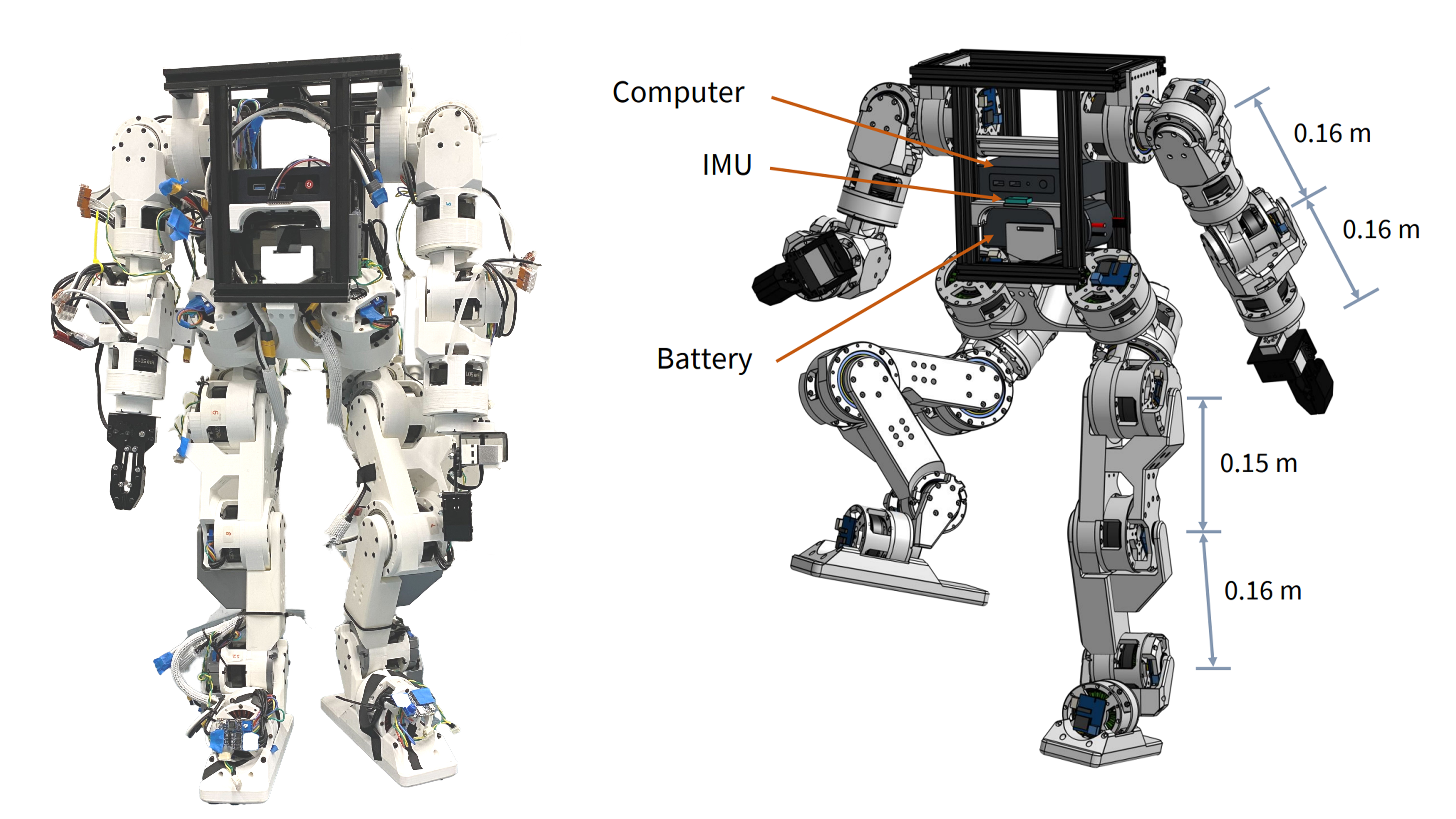
This isn't just an academic problem. The researchers building autonomous lunar rovers, developing low-cost humanoid platforms, and creating robots for healthcare applications all depend on being able to find and build upon relevant prior work. When the signal-to-noise ratio degrades, innovation slows down. Researchers waste time rediscovering things that were published but never found, or worse, build on flawed foundations because nobody had time to properly vet the literature.
The solution isn't to pump the brakes on AI tools—that ship has sailed. But the robotics community needs to have an honest conversation about what counts as a contribution worth publishing. Do we need seven slightly different approaches to the same grasping problem, each with its own paper? Do incremental parameter tweaks merit publication, or should they be aggregated into reproducibility studies?
Some fields have started experimenting with alternative models: living review papers that get updated rather than replaced, registered reports that separate methodology from results, and community-curated databases of negative results. The robotics field could learn from these experiments.
The uncomfortable truth is that more papers don't mean more progress. Sometimes they mean less. When researchers spend more time navigating the literature than advancing it, when review becomes an exercise in triage rather than synthesis, and when AI tools are used to process AI-generated content, we've created a closed loop that serves publications, not knowledge.
Seventy thousand papers in 2025 isn't a milestone to celebrate. It's a warning sign that we've optimized for the wrong metric.