
Mars Rovers Work Alone for Months — Why Can't Factory Robots?
There's something absurd about the state of robotics in 2026. We have a rover on Mars that has spent over a decade traversing an alien world, drilling into rocks, analyzing soil chemistry, and making autonomous navigation decisions in an environment where a software update takes 20 minutes to arrive. Back on Earth, warehouse robots still panic when a cardboard box is slightly askew.
The recent news from NASA's Jet Propulsion Laboratory about Curiosity's ongoing operations offers a stark reminder of this disparity. The rover operates with what the space industry calls "supervised autonomy" — it receives high-level instructions from Earth, then figures out the details itself. It evaluates terrain, plans routes around obstacles, positions its drill, and sequences its scientific instruments. All of this happens on hardware that's technologically ancient by current standards, running on a radiation-hardened processor less powerful than a smartphone from 2010.
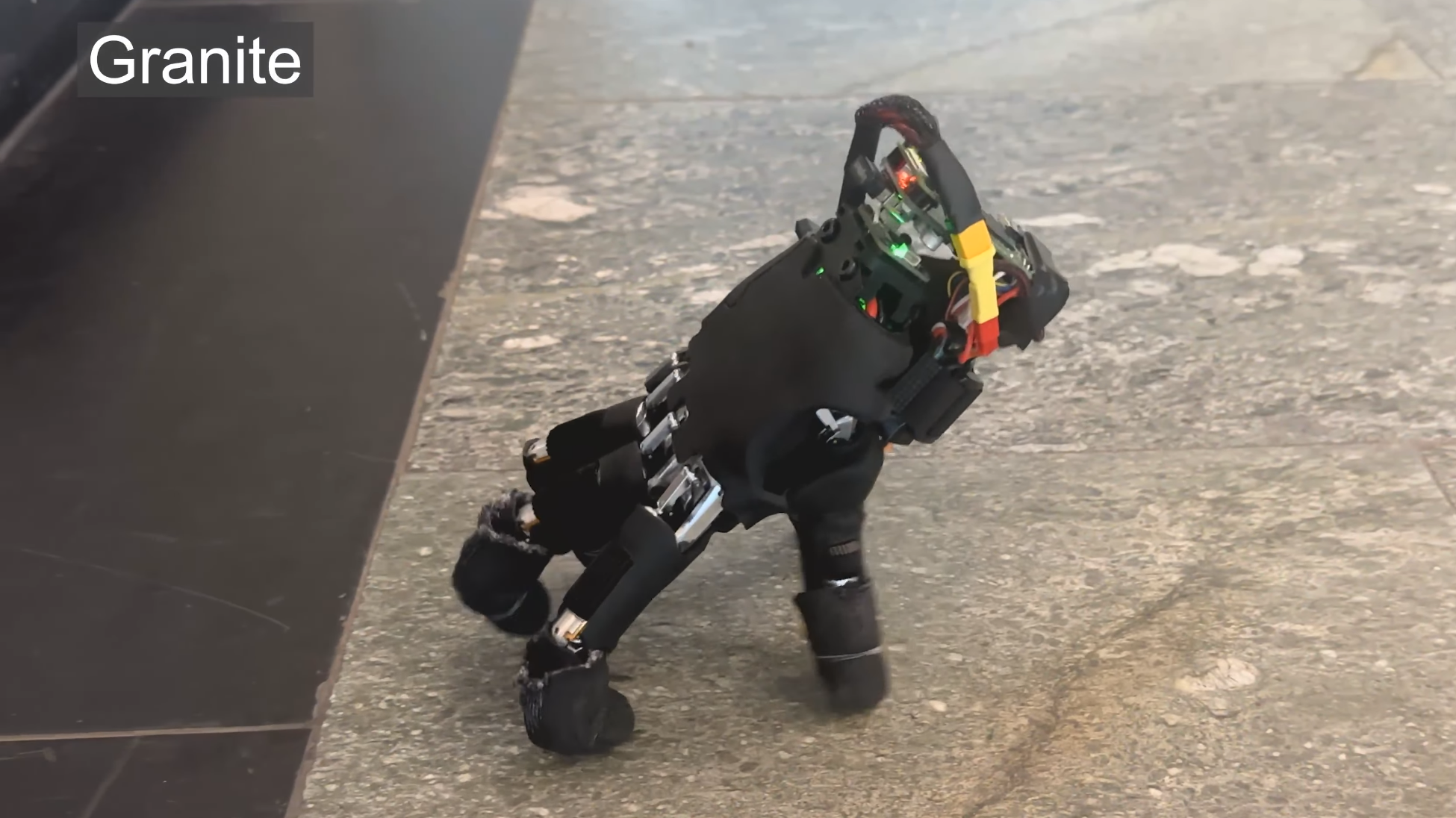
Compare this to the state of terrestrial robotics. The same week we learned about Curiosity's continued success, we saw yet another wave of announcements about AI agents that can write emails and generate reports — tasks that require zero physical interaction with an unpredictable world. Even the genuinely impressive robotics breakthroughs, like ETH Zurich's walking robotic hand, operate in controlled laboratory conditions where the biggest challenge is recovering from a fall onto a padded surface.
The gap isn't about hardware capability. Modern industrial robots have sensors and computing power that would have seemed like science fiction when Curiosity launched in 2011. The gap is about incentive structures and risk tolerance.
Space robotics operates under constraints that force genuine autonomy. You can't have a human in the loop when the loop has a 40-minute round-trip delay. You can't do rapid iteration when your next chance to fix a bug might be months away. These constraints have produced robots that are genuinely robust, adaptable, and independent.
Earthbound robotics, by contrast, has optimized for different metrics. Industrial robots prioritize speed and precision in controlled environments. Consumer robots prioritize cost and safety. Service robots prioritize not embarrassing their corporate owners on social media. None of these priorities demand the kind of environmental adaptability that space missions require by necessity.
This matters because the problems we most need robots to solve — caring for aging populations, responding to disasters, maintaining infrastructure in remote locations — look a lot more like the Mars problem than the warehouse problem. They require operating in unstructured environments, making decisions with incomplete information, and recovering gracefully from the unexpected.
The recent push toward "Sustainability Robotics," as proposed by EPFL researchers, hints at a recognition that we might be optimizing for the wrong things. But changing course requires more than new frameworks. It requires being willing to let robots fail, learn, and operate with the kind of autonomy we routinely grant to machines 140 million miles away.
Curiosity has driven over 20 miles on Mars, conducted thousands of experiments, and fundamentally changed our understanding of the red planet's history. It did all of this while more autonomous than most robots that share our own planet. That's not a achievement to celebrate — it's a gap that should embarrass us.